Wednesday, February 12, 2020

Mainland Surfing

 I've settled into my winter home, and am about a week away from beginning my northward migration again.  I'm in Mainland Mexico, in Michuacan, and the water is warm (but getting a little cooler every day) and the waves are fun.  Life here seems to stay pretty much the same, year to year; while further north in Puerto Vallarta, hotels and condos are being built and the patches of jungle are getting smaller and smaller, here the changes are smaller and slower. 
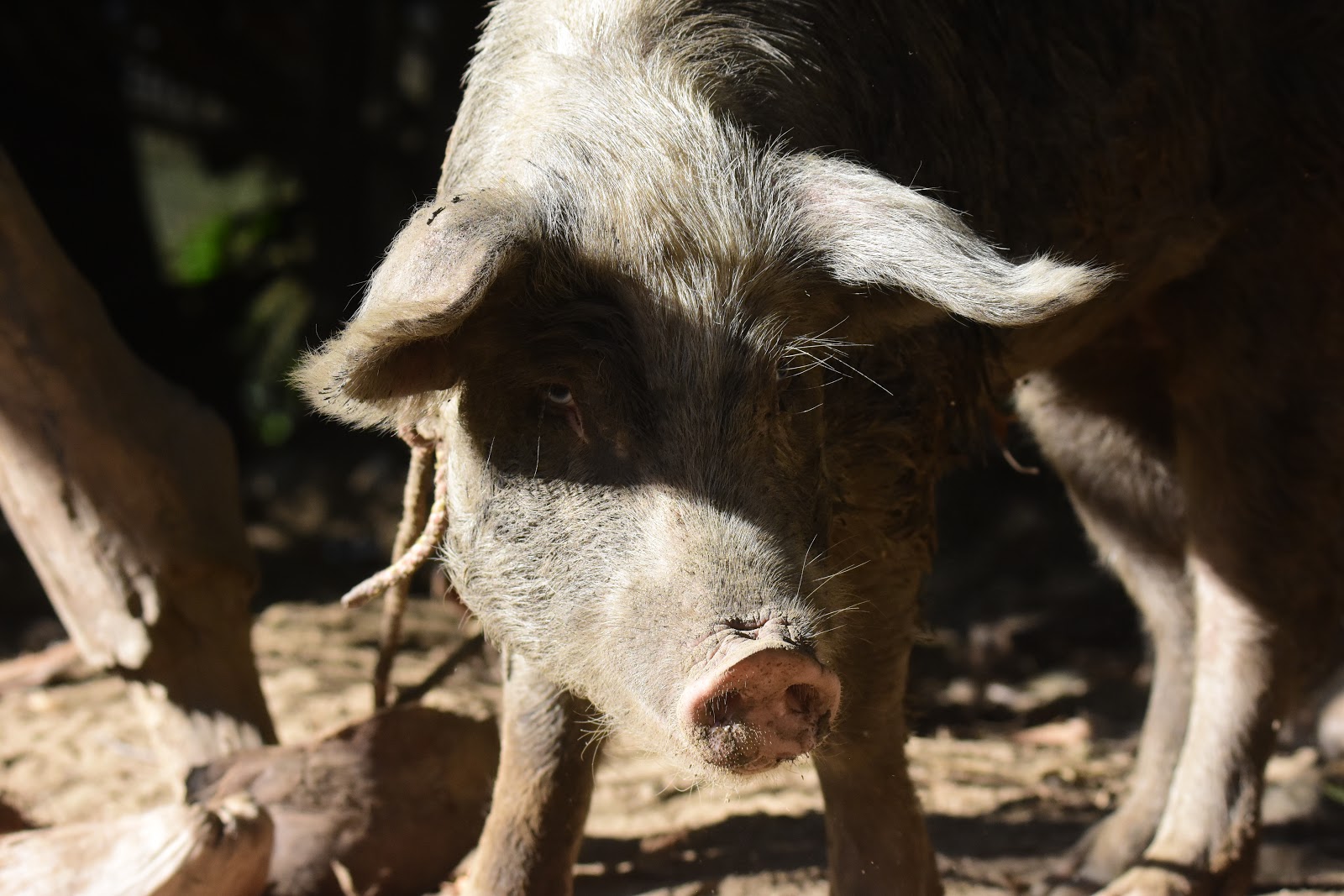
There are lots of pigs and chickens in the backyards and along the streets, as well as a herd of goats that are sent through town to pasture, and there are lots of migratory birds in the river.
 Here is a Greater Yellowlegs!  Possibly the same one I've seen up in the small rivers of Southeast Alaska! 
And here are some Black Necked Stilts, who I really enjoy watching.  I got to this place about a month ago, with Lindsey, and we rented a little room to explore and play in the waves from.  After a week we moved to a different one with a view of the river and the waders chasing after the little fish...  Now Lindsey is back in Baja working with the Gray Whales and I'm in a campground along the rivers' edge, and surfing as much as I can before my time is up.
 There are a lot of interesting plants and flowers here, and on one of the hikes I found this mixture of a cucumber and a death pepper.  It looks tasty and devilish at the same time.
 Also there are a lot of this flower in the river (on a small island) and it really shines at sunset.

But what I really came here for was surfing!  
 Here is one that Lindsey took when she was sick of surfing for a little while.  The wave is fun and punchy, but doesn't often barrel.
 On the full moon I delayed getting into the water to try and take some pictures of the moonset and surfers, and took this longer exposure showing the palm trees moving in the wind...
And this shot of the moon over the waves.  I wanted to get one of the moon and a surfer together, but sadly I was a day too late.  I needed to be there the day before the full moon to get the morning surfers with the moon setting behind them, and the proper lighting.  So maybe next year...
 This one of my friend Morgan going for a high cutback.

 And my friend Wes going for a little tube
 Another friend Kreigan on a steep take off.
 When the morning winds blow the offshore is really pretty, and down the beach in the beach break it looks awesome with the sun slanting in at first light. 
 This one is above my level, and about 30 ft from the shore, but it looks really pretty.

Sadly, with surfing, there are some consequences.  I've got a few bumps and bruises and cuts and scars on my legs and arms, and just yesterday, I got one on my head.  It wasn't a huge wave, but when I jumped off, the breaking water threw the board at me and the fin got my head as it went past.  A pretty looking little gash!
 I showed it to Wes and he recommended stitches, but I didn't want to pack up everything and go for a long ways to town.  So I got a second opinion from my campground neighbor, who said I could probably just let it be with some Iodine in it... but then one of their friends who was stopping by (and had a great medical kit) mentioned she had a stitches kit and iodine, and I asked her if she wanted to have a go at it.  Initially she was reluctant, but it being a great learning opportunity, she agreed and we began our surgery! 
 The first stitch hurt a little, and took some time, but the second, third, and fourth were professional and quick.  I think this is the kind of medicine (provided it is a simple cut and no muscles involved) that pretty much anyone can do and they need only the confidence to start, (and the steady hand) and it is mastered quickly.  I kind of wish I could practice this, in my Wilderness First Responder course.  Maybe on a pigs foot, but better on living flesh...
 So here is the aftermath.  much better!  I'll stay out of the water for a few days and therefore take pictures more.  Also, a little while ago it was really windy in the afternoon and I flew the kite to look over the town.  Here is an aerial view of the point and the river and the small town.

Sunday, January 26, 2020

The trip to Spain, and wandering around Baja with my brother

 So after extensively looking at the Pogo 40 in Barcelona, I did a bit of a trip around the countryside of Spain with my mother.  The first thing we did was drive down to the Ebro River and go out to the delta and find some Flamingos.  Unfortunately I didn't bring my long lens, but only my wide angle, so I don't have any shots of them.  Then we followed the river up as it became a dark and stormy night...
We found a tiny little town called Benifallet just as the darkness was descending, and the rain started to patter down.  I was driving, and managed to find a little street that I thought would go through, but it became even narrower, and I couldn't make it.  Nor could I turn around, it was a hectic moment and finally we managed to scrape out of it, but not before touching a flower pot, and hearing a crack.  Mom thought we destroyed the pot so after getting to a safe spot to park she went looking for the owner to make recompense, but it turned out to be just fine.  Then we found a hotel.  The thing in Spain is that everyone is on siesta until about 7 or so in the evening, so you can't just roll up to a place and hope someone will be there, but after finding a number and calling we managed to get it to work, and we got a room. 
The next day we went to the local tourist attraction (that we hadn't ever heard of) which was a cave. It wasn't far away, so we drove on up and looked around.  Just outside the caves there were a lot of trees, and this is one of them:
 To my eyes it was a form of Yew, and it looks just like the Taxus Brevifolia that we have in the pacific northwest, but I don't rightly know what it is.  Maybe this is what William Tell used to make a bow? 
Inside the caves it was quite warm and humid, so taking pictures was hard, because the lens would fog up.  But I managed.

 After the caves we drove on west, looking to go to a place where Don Quixote found some "monsters" and fought them (but they were actually windmills).  We didn't get that far, but did find some windmills.  In this picture, the wind is coming from the top of the frame, so the blades are upwind of the pole that holds it all up.  Why are they bent forward, into the wind? 

It doesn't make it more efficient, I don't think.  The only thing I can think of is that it keeps them from hitting the pole and breaking, but then, why not just make them be on the downwind side?  I can't figure it out, but since the whole thing is powered, and not passive (there is no tail to turn it) they must figure that the wind could shift quickly and they want to be sure the blades will never hit, the only way to do that is to design them to be on the side that would make them try to hit and then make them strong enough to resist it. 
I have heard tales of big windmills breaking, and how does it happen?  Do the poles break off from the high winds?  Do the blades hit?  I wonder.  At any rate, the tip speeds are impressive on these, and standing under it you can hear them zap through the air, a hissing kind of noise.  Its very fast.
From there we went to Alcaniz, an old midevil town, with a river that flows nearly all the way around the town.  It is a big bend in the river and there is a big hill in the middle of the bend and the town sits on the hill.  Keeps the riff-raff out, since they have to swim and climb (mostly).  We managed to find a way in, and climbed up to the church...

 and then on to the castle on the top of the hill.  It was a pretty sunset from there.
 Then we went to Balaguer, and I didn't take any pictures, but it was also a midevil town with some nice looking structures.  But after that, we drove up into the Pyreneese and found this little church on a hill all by itself.  It was just in front of the first wave of mountians, those that have been uplifted sharply, and the local stone is Limestone, so the cliffs are fantastic, as well as having caves.
 We came back into Catalonia and the flags were waving proudly.  This whole area is striving for independence, and has been for many years.  I've been reading the "Master and Commander" series, which is fiction, but set in 1800-1820 and one of the main characters is from Catalonia, has a castle in the hills (could have been the one on the above picture, hidden on the mountain opposite, you can just barely see it if you zoom in), and is striving for Catalan freedom.  Striving they continue to do. 
 It was a trip, but I was glad to be back at my truck and surfboard, and I spent the next month surfing at a break near Todos Santos.  Just before Christmas, my brother, Abe, and his wife, Katrina, showed up and we drove around the southern peninsula.  We had a nice fire on the beach to start...
 And drove up to Bahia Frailes, where there is a great place to walk around and snorkel.
 Then we set off and climbed up to the top of the hill at the end of the beach.  I had only climbed this hill once before, in 2010 (early november, I recall) just after I had dropped Danny off in Cabo san Lucas and continued my adventures with Altair.  During that climb, I found this cactus in the morning light and took a picture of the same one in this picture:
 You can see how much it has grown in 9 years.  Continuing to the top we had a great view over into the bay.  I think I'd like to come back with a sailboat again to this bay.
 On the way down we found a stick insect.  A walking stick.  What's brown and sticky?
 Then, I stopped taking pictures.   It's unforgivable, I know, but there it is.  So we drove on up to La Paz, then back down the west side and surfed and I dropped them off and went back to surfing some more.  In mid January, I picked up Lindsey in Puerto Vallarta and we drove down the coast towards Michuacan, and found a Roseate Spoonbill!

  Now we are at a nice little town with a surf break and we'll be here for a little more.  So the water is warm, the surf is inviting, and time passes on.

Saturday, January 25, 2020

Trip to Barcelona... To look at a Pogo 40

 I (not so) recently went to Barcelona, in Spain, to look at a boat.  A Pogo 40, because as the avid reader (and I am sure that there is at least three, and one of whom cares about boats) should know, I am besotted with the fiberglass and spectra smorgasbord that is the Pogo 40.
I first found out about this kind of boat several years ago, and wanted one, but only two years ago when I was boat visiting while anchored out at Punta Mita (aboard my stout Altair) I came across a woman who knew someone that actually had one!  So then I managed to see and sail on that boat shortly afterwards, and since then I've been very hotly looking.  But they are a pricey sort, and mostly far far away.  So when I found this one online in September, I began the process of emailing the guy and setting up the visit, and figured I'd do a real good look over, and it would be worth my time, and the money.

Here is a picture of me doing a comprehensive look

And more of a look...

Sadly, I did not fall head over heels in love with this boat.  I did a very comprehensive look, and took pictures of all the faults, and (for the price) this one did not impress me as much as the one in Long Beach.  So lets talk about the faults...  I couldn't get a very clear picture from the owner about what exactly he had done in maintenance, and I suspect that he did a little, but left a lot of the war scars from the boat's racing history un-mended.  What a history, by the way, this boat has crossed the atlantic racing at least 25 times, and has more than 35,000 miles under its keel. 

So first off, there is corrosion at different places.  In this picture you can see the rivet points that connect the black boom to the grey gooseneck and many of the rivets are corroded away.  Same for the other side and the other end as well.  Not a huge deal, but not a great sign.  Then look at the mast track, the vertical part above the gooseneck, going up the mast, it is aluminum, touching carbon, and there is corrosion seeping out from that.  What shape are the screws that hold it together in?  what happens if the mast track pulls off in the middle of the ocean? 
 In fact, Pixel Flyer, a class 40 that was attempting an around the world nonstop record, had just that happen, and abandoned the attempt, and is now for sale (for a lot of money)
So what else was wrong with this boat? 
 I was quite surprised to find that lots of the lines that run around on the deck, to sails and things, the "running rigging" was in really nice shape, despite being left out in the sun all the time, but there was a few things with a lot of sun damage.  The two running backstays, which hold up the mast when you are going downwind, were in bad shape.  Not broken or parted, but visibly scorched and ragged.  There is no cable for the back of the boat, so these are pretty important.  But the cables that run up and down are all very old, and have never been replaced, so they might be considered suspect for ocean crossings.

 The engine, which started and ran well, probably has lots of life in it yet, but since I had just come over from the Pogo in Long beach with the same motor, I could compare the two by sound and smell.  This one had more of a used rattle and the smell was not great.  Like it was old.
I could trust this to cross the atlantic with, but it didn't charm my socks off.
 And the sails!  There were lots of sails in the ad, but several of them were not present on the boat and I was a bit surprised that he didn't bring them down before I got there, he had a month to prepare.  Also maybe he could have cleaned the boat and the bottom...? 
So the sails are old race sails that were sailed to their death, or nearly so.  The main is in bad condition, especially on the top, and that is the most important part, since it is always being used.  The bottom can be put away when you reef the sail, but not the top.
 
The jib wasn't torn but wasn't pretty, and the other sails we didn't look at too carefully, just rolling them out a little on the sidewalk, so I didn't get to see the shape.  I wanted to run them up and roll them out but the guy didn't want to.  (he didn't use them, so figured I wouldn't need to see them)

So I spent two days looking at the boat and the first day was inspecting, climbing the mast, and diving the bottom, the second we looked at the sails and then went out on the water.  It was a bit telling that when he let loose all the lines, the motor wouldn't shift into reverse (the cables were rusty) and we had to fend off the other boats for a while until he got that working, and then we ended up backing all the way out of the harbor...
 I think the backing out of the harbor was partly because he wasn't sure if it would shift into forward, and wanted space.  But also the harbor is small and shallow and the boat is deep. 

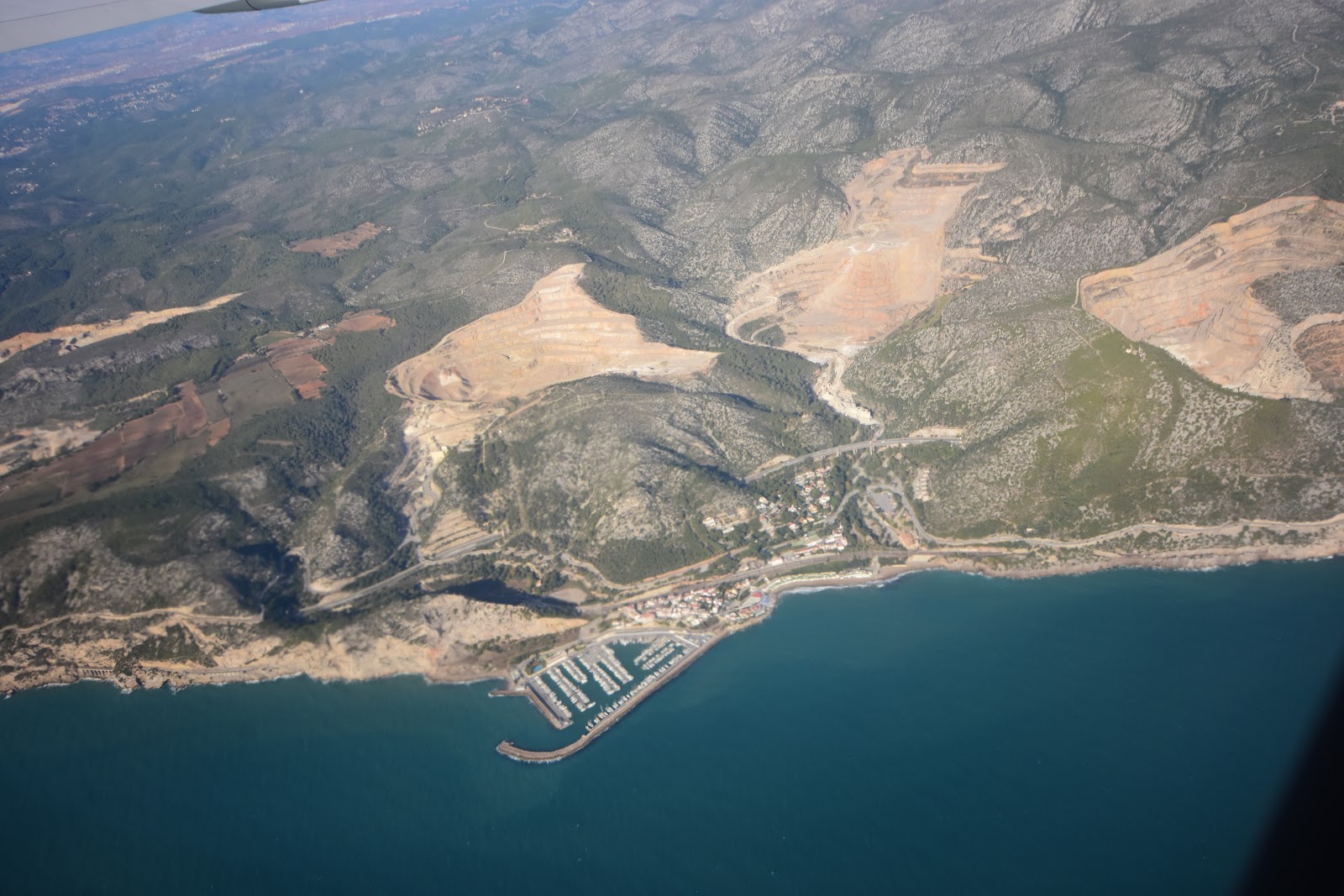
So here is a shot of the marina while I was flying away.  You can spot the boat barely if you zoom in, its the second one from the end on the bottom row, touching the breakwater. 

Now these are the faults, but I was really impressed with the hull and I'm still seriously considering this boat as a purchase, but the price has to be low enough to make all the improvements within my modest budget.  So stay tuned for future possible developments here.  Or elsewhere...

Wednesday, November 13, 2019

Baja California

 I've made it to Cabo San Lucas, and am dropping off Lindsey today at the airport.  We had a great time together exploring the peninsula. 
We started off near Punta San Carlos, where there is a lot of dust, and there were some determined cows that were tromping through the dust to get somewhere.  The sun was rising and the dust looked really neat.
 We also went to Punta Baja, where we found some small waves and a full moon, with an Osprey perched along a clifftop watching the water.
 Then we went to what we have been calling the "Dolphin Coast", which is a really cool area that seems to be little traveled.  We discovered a huge group of Sooty Shearwaters and while we were surfing at what we named "shearwater express", they came bombing along just over the waves and all around us, over us, and zipping right next to our heads, possibly as close as 5 feet away, gliding along the surface and the crests of the waves.  It was very exciting to be sitting in the middle of a freeway of birds, in the oncoming lane, watching traffic zip by.  I don't know how many there were, but about 50 at any moment were going by, and it lasted for 30-45 minutes, so lets say 50/second is 3000 a minute, and for 30 minutes is about 90,000 birds. 
Later on we found a bunch of fishes and surfed with them.  The small fish are everywhere, and darken the water, but are scared of big things, so they leave a clear patch of water next to a swimmer or surfer.  When you catch a wave, the fish are caught up in it too, and they flip and flop and wiggle against your legs which feels quite strange.  In the evening dolphins came in and started chasing the fish, so the birds also descended and it was a mad feeding frenzy.  I tried to paddle out into it but the frenzy moved too fast.
 From the dolphin coast we headed on down and found some nice places to surf.  Lindsey is getting a nice little grab rail stance and it works really well for steeper sections.
 There were some fun ones for her, but it was pretty little overall.

 Here's one of the bigger ones.  I notice she holds here forward hand down, which I do as well, and I've been told its a bad habit.  I guess I've passed that habit on.  (apparently you should point to where you want to go)
 Finally we made it to Southern Baja and in the East Cape area we played around a bit.  The waves were much bigger here and the beaches steeper, so there is this awesome reverb that happens when the wave bounces back and hits the oncoming wave and it slaps together.  Lindsey took this shot.
 While she was taking the waves shots, she also got some of me surfing this little reef break that is a bit of a nail biter.  It was nice and big but hard to make sometimes.
 Here's a bigger one.  I'm very proud of getting the fin out of the water, you can see the dark thing under the back of the board.
 The wave ends in a shorebreak close-out, so you have to go go go and then pop over the top.
 Sometimes it is kind of hollow.
 The trip was really great, but we've decided that living out of the truck for two months is a little bit too long.  Next time we will probably be quicker and then go to a spot and stay in a house.
I've got a few more days until I fly to Barcelona to look at a Pogo 40 there, so just in time to get some more surf in.